
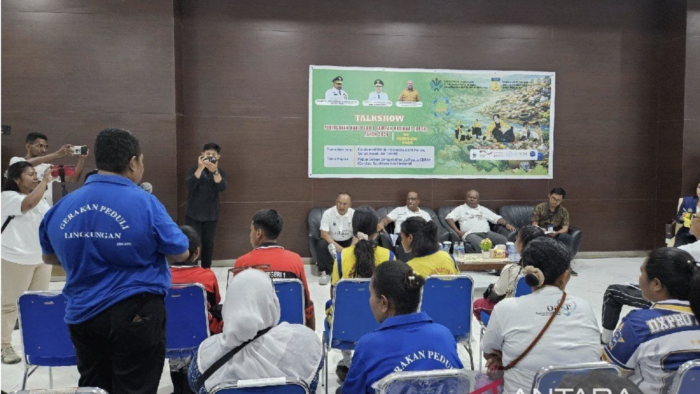
The commitment to building a safe, healthy, clean, and beautiful Papua continues to strengthen through structured collaboration between the provincial government, public facility managers, and environmental communities. The approach extends beyond forest conservation and biodiversity protection to include data-driven and community-based waste management systems.
With an estimated population of 1.07 million in 2025 and an average waste generation of 0.4 kilograms per person per day, total waste production in Papua is assessed at approximately 477 tons per day. This figure forms the basis for a provincial waste management roadmap covering reduction strategies, transportation systems, processing mechanisms, and monitoring frameworks.
Each district and municipality is encouraged to calculate waste volumes accurately to ensure targeted and effective policies. Although budget limitations remain in some areas, current policy direction indicates that financial constraints are less likely to hinder progress, as optimization of existing resources is being prioritized.
Transformation is being initiated at the household level. Waste separation between organic and inorganic materials is positioned as a key intervention. Organic waste can be converted into compost or animal feed, while recyclable materials generate economic value through circular economy initiatives. Public awareness and behavioral change are assessed as the most likely determinant factors in achieving long-term impact.
Village funds are increasingly encouraged to support environmental awareness programs, not solely physical infrastructure. Strengthening education at neighborhood and village levels is likely to accelerate collective behavioral shifts.
The 2026 National Waste Awareness Day served as a momentum to reinforce coordinated action. Routine clean-up activities now extend from government offices to schools, houses of worship, markets, villages, and coastal areas. River cleaning, tree planting, and productive yard utilization reflect concrete implementation on the ground.
Community-based initiatives further reinforce the green movement. Environmental groups such as Guardian Hollo Sentani actively conduct reforestation in the Cycloop Mountains and surrounding watersheds. This multi-actor collaboration demonstrates an integrated governance approach combining regulation, public participation, and grassroots mobilization.
At the transportation sector level, Sentani International Airport illustrates structured waste management practices. With approximately 3 tons of daily waste—around 40 percent organic—segregation begins at the source through designated drop boxes and three temporary collection points. Partnerships with local small enterprises and waste banks strengthen recycling mechanisms and economic sustainability.
In addition, the airport applies an environmentally conscious skylight system that maximizes natural sunlight, reducing electricity consumption during daytime operations. This integration of energy efficiency with operational sustainability reflects a broader institutional commitment to green standards.
Overall, the evolving pattern indicates that the realization of a clean and harmonious Papua is most likely to be achieved through policy consistency, technical capacity strengthening, and sustained public education. With regulatory foundations in place and community participation expanding, Papua’s transition toward a greener and more resilient future is progressing in a structured and collaborative manner.
Konten Terkait
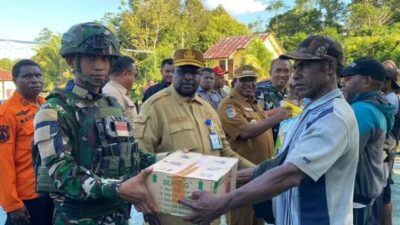
Community Solidarity and Government Support Strengthen Resilience in Maybrat
Strong collaboration between local communities, the regional government, and TNI-Polri is reinforcing social resilience and
Indonesia Strengthens Coordinated Development in Papua to Accelerate Welfare and Inclusive Growth
The Government of Indonesia continues to strengthen coordinated development efforts in Papua by aligning regional